Showing posts with label history. Show all posts

Monday, July 13, 2015

Vintage Tribune

Whether or not you have visited Chicago, The Chicago Tribune's Instagram of vintage photos is certain to make you fall in love with the Windy City. With photos being uploaded daily highlighting various historical events, decades and people, it's a great way to learn something new while also envision what life was like generations ago. It's quite a treat!


The Wrigley Building and Tribune Tower, 1945. Check out the building and railroad tracks west of the Wrigley Building where the Trump Tower now stands.

Mary Gorman helps prepare an exhibit for the annual chrysanthemum show at Washington Park in 1929.


A workman checks for cracks in the Wrigley Building's terra cotta facade and its iconic clock in April 1977. 


Mr. and Mrs. John Barnes, part of Chicago's "society", stroll down Lake Shore Drive on Easter Sunday with their dog Dandy in 1932. 

Agnes O'Malley of Oak Park dances with Pvt. Leo J. Kedziora of Chicago at the Chicago Servicemen's Center in August 1945. Photo by Josef Szalay.

Members of the Chicago City Ballet strike poses of ballerinas in the paintings and sculptures of Edgar Degas at the Art Institute of Chicago in 1984.

Youngsters plunge into Lake Michigan for relief from the August heat in 1973. Photo by James Mayo.

The Mooseheart band on parade during the 42nd annual Loyal Order of Moose convention, July 4, 1930, in Mooseheart, Ill. A crowd of more than 30,000 attended the holiday celebration.

A final show of fireworks explodes beyond Lake Point Tower at the end of ChicagoFest at Navy Pier in August 1979. Photo by Walter Kale.

Richard Nosal, 13, shows off for friends at Bunker Hill Forest Preserve, July 1969.

June 11, 1964: The Rolling Stones hold a press conference in front of the Tribune Tower. From left: Bill Wyman, Brian Jones, Charlie Watts, Keith Richards and Mick Jagger. The Tribune story that ran June 12, 1964, said "The visit of the Rolling Stones, who say they are singers, ended abruptly yesterday on North Michigan Avenue. A barber came along. There are five Rolling Stones, all from London. All wear tight trousers and haggard looks. All of them slouch. Each look unkempt. And they wear their hair, they vow, two inches longer than The Beatles. And that's where Larry Koznatz came in. Koznatz is a barber in the Sheraton-Chicago Hotel. The Rolling Stones were slouched in five folding chairs on the sidewalk in front of Tribune Tower's Nathan Hale court. Squealing teenagers, incredulous adults, and members of the press surrounded them." When Koznatz tried to hold scissors next to their hair, the Stones' manager Andrew Oldham refused. When Koznatz got closer, off went the Stones.

Steven Katt pours champagne for Terry Strunck at Burnham Harbor in 1983.

Washington Park's boating season officially opened in April 1928 with Ruth Hamquist, from left, Marie Cannon, Marion Lynch and Helen Kelly taking a tour of the lagoon. This scene is in the daytime, but at night the occupants of the park boats are more apt to be young couples gliding over moonlit waters.

An estimated 100,000 people pack Washington Park for barbecue, music, and politics during Sunday afternoon's neighborhood festival on July 10, 1983.


Pedestrians stroll by the F.W. Woolworth store, State and Washington streets, July 1938.


The Pacific Garden Mission, 646 S. South State St., 1956. The mission, founded in 1877, is now located at 1458 S. Canal Street. The State Street location was demolished to make room for an expansion of Jones College Prep.


A mother and daughter pose in their home-sewn dresses outside the Tribune Tower in July 1968. The patterns were identified in the caption as No. 8383 for mom and daughter's as No. 8384. "A smart chain belt" was added by mom.


Mary Hays, who is blind, is the Braille proof-reader and transcriber at the Chicago Chapter of the American Red Cross in 1929.


Here's a little Blackhawks history for your day: Mr. and Mrs. Frederic McLaughlin (formerly Irene Castle) in 1928. McLaughlin purchased a Chicago ice hockey franchise and named them the Blackhawks in 1926. His wife Irene is credited with creating the Indian Head design of the first Blackhawk sweater. McLaughlin would own the team for 18 years and see two Stanley Cup wins.


Dancing away the blues at the 2nd annual Chicago Blues Festival in June 1985. 


A recent glass-plate negative find: Reri the Hawaiian dancer in 1932. 


Le Petit Gourmet's outdoor space in the Italian Court, 619 N. Michigan Avenue, around 1930. The Italian Court was an urban sanctuary, razed to make way for a new highrise at 625 N. Michigan in 1968. The Tribune's Mark Jacob and Stephan Benzkofer, in their "10 Things" column, wrote: "The Italian Court was a series of apartments and shops at the southeast corner of Michigan Avenue and Ontario Street. Nestled in the courtyard was Le Petit Gourmet, a cherished date-night rendezvous for Chicagoans ... In the 1920s, the restaurant hosted Sunday evening literary 'readings.' For a dollar, patrons enjoyed coffee, cakes — and the privilege of conversing with the likes of Robert Frost, Carl Sandburg, Vachel Lindsay and Edna St. Vincent Millay after they recited their poetry."


Mrs. T. Clifford Rodman (center) and Mrs. Russell Kelley arrive for the opening night of the Chicago Civic Opera on Nov. 3, 1927, at the Auditorium Theatre. The opera was La Traviata, with Claudia Muzio and Tito Schipa.


An undated photo of the Black Pearl restaurant, 590 W. Diversey. In a review published April 21, 1963, Kay Loring wrote, "The Black Pearl is a fine spot, I've found, for entertaining out of town guests who have a yen for Polynesian dishes. Chef Jimmy, who served his apprenticeship at Trader Vic's in San Francisco, has been doing a bang-up good job here, especially on such Polynesian main dishes as the chicken or beef snow peas, beef imperial, chicken almond, and lobster cooked in wine and butter sauce. We particularly like the Tiki room where surroundings are interesting and there's a stringed trio ... I'm told the husky voiced woman singer, who looks as if she hails straight from the islands, actually is Hungarian."


The Trident, left, and White Cloud, right, start the Race to Mackinac in July 1947. White Cloud had won the race in 1942.


Follow Twirling Clare: Facebook//Instagram//Pinterest//Tumblr//Twitter

Monday, June 9, 2014

The Original Pantone Color Guide

Each week I write a blog post for my company, Cristofoli-Keeling. Last week's post was particularly interesting and I wanted to share with all of you!

Color My World.
The Pantone Color Guide is the standard for visual representation of color arranged to be a source of inspiration for the design and décor industries, among other uses, including color matching on-press. All 2,100 colors are compiled in a flip deck, making it easier for creatives to manage their aspirations in a comprehensive and compact format – while perhaps giving others anxiety about how many different shades of white exist! The fashion, interior, cosmetic, product design, and home furnishing industries are influenced and reliant on the Pantone’s color standards. Pantone released its original color guide in 1963, but it was not the first to bring the color spectrum together as a guide and resource.
Last month, the “original Pantone” was discovered by Erik Kwakkel, tucked away in a French Library. Almost three centuries before the Pantone Color Guide was invented, an unknown Dutch artist named A. Boogert, mixed and described every color imaginable in an 800-page book, Treatise on Colors, now available online in high resolution.
Treatise on Colors was developed in 1692, intended to be an educational guide on mixing watercolors. The author thoroughly explains the use of color in paintings and how to change tones by adding different portions of water. In accordance with the descriptions, the artist documents hundreds of colors to show the variations in the color spectrum. The final project was the most comprehensive guide to paint and color of its time; and the manuscript is truly a work of art. Although the creation was most likely intended to be an instructional manual, there was only one copy of the book – seen by very few. Thanks to the Internet, the encyclopedic guide is garnering attention and awe the world over.
With this discovery, it’s interesting to look at how the use of color has changed since the hand-painted color guide over 300 years ago, to its more contemporary version, The Pantone Color Guide. The purpose ofTreatise on Colors was for artists to incorporate these practices in their artwork – for pure artistic renderings. The Pantone Color Guide is most commonly used, as a color selection tool for interior designers, graphic designers, architects, package designers and the like.  Today, a discovery of the theoretical approach might be exactly what the design industry needs. Graphic designer, John Herskind, has commented, “there are people who learn a little bit about Photoshop and now they’re a graphic designer without knowing anything that goes into good design…there are people now who call themselves ‘creative directors’ and don’t know how to use a Pantone book.” Maybe the resurfacing of this masterful work of art will re-inspire this modern wave of artists to not only reassess the implementation of resources like the Pantone Color Guide, but more importantly, to appreciate the artistic theory and creation behind the hues.


If you'd like to read more of my posts, visit Piehole every Wednesday. Enjoy - Toodles!


Follow Twirling Clare: Facebook//Instagram//Pinterest//Tumblr//Twitter

Tuesday, April 15, 2014

American Cool

The National Portrait Gallery is hosting an exhibit titled American Cool. 
The exhibit explores the "coolest" figures of generations past. But what exactly does cool mean? It's a seemingly unique trait and supreme compliment that carries a global fascination. People obsess over the mysterious and inexplicable phenomenon - some going as far to spend their lives trying to emulate and  capture the cool factor - the essence bestowed among the esteemed and elite.
This exhibit looks at the American concept and features those who have contributed to an artistic vision of the American culture movement. The movements might have changed throughout the years, Walt Whitman to Kurt Cobain; Billie Holiday to Tony Hawk, but each are/were significantly revered for their special something.
Take a look at some of the creme de la creme - the coolest people and their featured portrait. 

Elvis Presley

Frank Sinatra

James Dean

Miles Davis

Walt Whitman

Billie Holiday

Jean-Michel Basquiat

Deborah Harry

Joan Didion

Lauren Bacall

Madonna

Marlon Brando

Steve McQueen

Tony Hawk

Kurt Cobain

Audrey Hepburn

Jimi Hendrix


Follow Twirling Clare: Facebook//Instagram//Pinterest//Tumblr//Twitter

Friday, February 7, 2014

Audrey


Our family grew up watching PBS from Barney days to Arthur - and all the programs in between. It stimulated an eagerness to learn and a thirst for curiosity, both of which I hope to maintain throughout my adult life. PBS has gained a wide acclaim amongst the general public in recent years. Downtown and Sherlock have helped create an unprecedented following for the station - which I think is marvelous!

A couple of weeks ago I watched the Salinger biography and just this past week I was treated to an inside look at one of my favorite icons - Audrey Hepburn! It's one of the many reasons I love PBS - I can always come across so many fascinating features, be it a fashion icon or a literary legacy; an antiquing roadshow or a trip to Europe. Obviously, I can't neglect some of my personal favorites: Sherlock and Call the Midwife. 

I don't spend every evening watching documentaries, drinking tea, and reading literary classics until I hit the sack. As lovely as that sounds (and as much as I'd like that to be my evening routine), I can only take so much of monotone white-haired men in tweed blazers with long noses lecturing about historic events. I need my healthy dose of crime shows and sitcoms :)
It's all balance. Because everyone deserves to live a life with time for knowledge and discovery, just as they deserve time for vegging out to television show while simultaneously flipping through Instagram, Pinning, Blogging, and eating chocolate chips. 
True life.
I like to say I dabble in both realms!

Back to the point. On Tuesday evening I watched a documentary on Audrey Hepburn and it was utterly superb. As my parents can attest, it's a rare occasion when I am completely engaged in a television program (see the description above) and this was an exception!

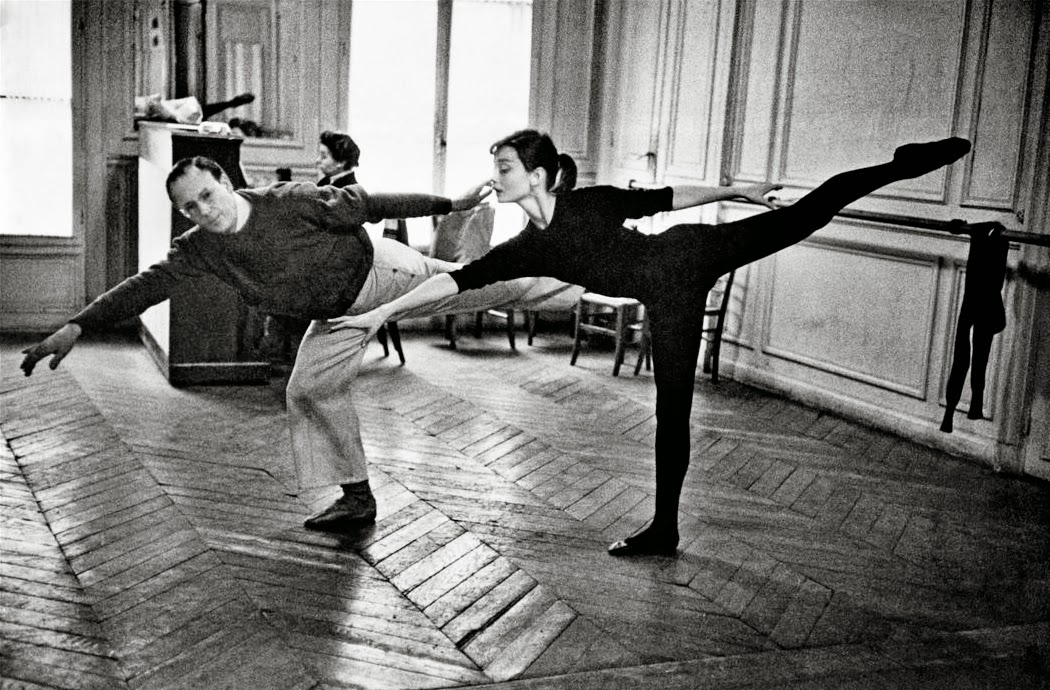
I learned so much about the actress' beautiful persona, external and internal. We know Audrey for her famous roles: Sabrina, Eliza Doolittle, Holly Golightly. But the women behind the doe eyes was a passionate and soulful humanitarian. She suffered through much tragedy beginning as a teenager when she almost died during Holland's Hunger Winter of 1944-45. Soon after, her dreams of becoming a professional ballerina were crushed because of her illness during the war and she was forced to find another profession. She found acting, and acting found their star. 
Her career was just as stressful as it was glamorous, and hidden beneath the pearls and ballet flats, her personal life brought many periods of despair. With two miscarriages and two failed marriages - it took her longer to find happiness than she hoped. She bid farewell to her acting career in the late 60s with only occasional roles in the years following. She knew she wouldn't be able to successfully manage both an acting career and motherhood, and chose to be with her sons. After her second divorce, she found love in a man who happened to have grown up within miles of Audrey's home in Holland. Both of them had survived the Hunger Winter and, to Audrey, it was both bliss and relief to find someone who finally understood her. 
Audrey wholeheartedly devoted her later years working with UNICEF. She felt she owed her life to them, as they were the service organization that provided food and medicine to the survivors of the Hunger Winter. Audrey became a national spokeswoman for UNICEF and traveled around the world visiting developing countries and reporting back to the United States on their struggles - encouraging Americans to support women and children around the world. 

Today, I am reflecting on Audrey's character and legacy. 


Follow Twirling Clare: Facebook//Instagram//Pinterest//Tumblr//Twitter
Related Posts Plugin for WordPress, Blogger...